Spring Boot – The Complete Developer Guide
A practical, deeply explained guide to mastering Spring Boot — from startup internals to production-grade systems.
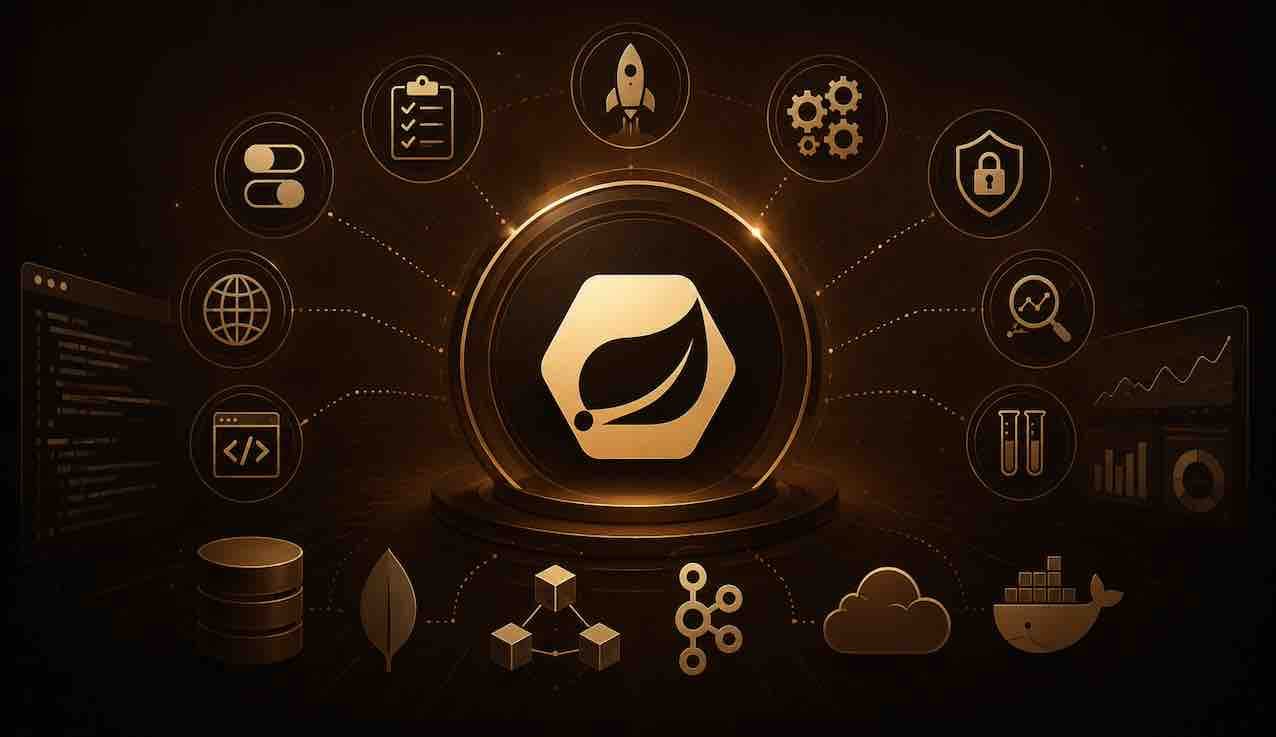
Spring Boot has become the dominant framework for building modern Java backend applications. But while getting a simple application running is easy, truly understanding how Spring Boot works — auto-configuration, dependency injection, application startup, profiles, data access, observability, security, testing, messaging, and production operations — requires much deeper knowledge. This series is designed to take developers step by step through the Spring Boot ecosystem, starting from the foundations and progressively moving into advanced real-world topics. It explains not just how to use Spring Boot, but why the framework behaves the way it does internally — helping developers debug problems confidently, make better architectural decisions, and build production-ready systems. The tutorials cover application startup internals, bean lifecycle management, configuration and profiles, REST APIs, MVC applications, validation, Spring Data JPA, MongoDB integration, Kafka messaging, security, observability with Micrometer and OpenTelemetry, Testcontainers, integration testing, and deployment concerns. Whether you are learning Spring Boot for the first time, preparing for senior backend interviews, modernising enterprise Java applications, or trying to move beyond copy-paste tutorials into real understanding, this series provides the mental models and practical knowledge needed to become highly effective with Spring Boot.
Articles
6
Total read time
~126 min
Last updated
May 2026
Difficulty
Advanced
How to read this series
Start with the foundational tutorials explaining what Spring Boot is, how it differs from the Spring Framework, and how the application startup process works internally. These early tutorials establish the mental models that make the rest of the ecosystem easier to understand. From there, move into dependency injection, bean lifecycle management, configuration properties, profiles, and auto-configuration. These concepts form the core runtime behaviour of every Spring Boot application. Once the fundamentals are clear, continue into web development topics — REST APIs, validation, exception handling, MVC architecture, request lifecycle management, and API design patterns. The data access tutorials on JPA, transactions, MongoDB, and caching naturally build on this foundation. The messaging, observability, security, and testing sections are especially valuable once you have built a few applications yourself. These tutorials focus heavily on production realities: debugging, tracing failures, securing APIs, integration testing, and understanding behaviour under load. Advanced operational tutorials — including Micrometer, OpenTelemetry, structured logging, Kafka consumers, Testcontainers, Docker deployment, and performance tuning — can either be read in order or used as reference material when solving specific problems. Each tutorial is self-contained and practical, but reading sequentially gives the strongest long-term understanding because later topics build on earlier Spring concepts and runtime behaviour.
Table of Contents
6 articles • 126 minutes total reading time
Spring vs Spring Boot: The Definitive Guide
IntermediateWhat they are, how they relate, and which to use — clearly explained for Java developers
How Spring Boot Startup Works: A Step-by-Step Guide for Java Developers
AdvancedA practical deep dive into the full Spring Boot startup lifecycle — from JVM launch and configuration loading to bean creation, auto-configuration, proxies, and embedded server initialization.
Spring Boot CommandLineRunner and ApplicationRunner: The Complete Guide
IntermediateChoosing the right startup hook, getting execution order right, and knowing when to use something else entirely
Spring Boot Profiles: The Complete Guide
IntermediateHow the same JAR runs correctly on a laptop, in CI, and in production
How Spring Boot Auto-Configuration Works (Explained Clearly)
AdvancedUnderstanding Spring Boot Auto-Configuration Internals — How It Works, How to Override It, and How to Debug It
Spring Boot Scheduling: @Scheduled, Cron Jobs, Thread Pools, and Distributed Locks
AdvancedHow Spring scheduling actually works — and what that means for the code you write
What You'll Learn
Prerequisites
- Basic Java programming knowledge
- Familiarity with object-oriented programming concepts
- Basic understanding of HTTP and web applications
- Some exposure to databases is helpful but not required
Frequently Asked Questions
Is this series suitable for complete Spring Boot beginners?
Yes. The series starts from the fundamentals and progressively builds toward advanced topics. Early tutorials explain core Spring concepts carefully before introducing production-level concerns like observability, messaging, and distributed systems integration.
Does this series explain Spring Framework concepts too?
Yes. Spring Boot sits on top of the Spring Framework, so understanding dependency injection, bean management, proxies, transactions, and the application context is essential. The series explains these concepts deeply instead of treating Spring Boot as magic.
Will this series help with real-world backend development?
Absolutely. The tutorials focus heavily on practical backend engineering concerns — API design, configuration management, security, testing, debugging, observability, Kafka messaging, and production readiness — not just toy examples.
Does the series cover testing in depth?
Yes. Multiple tutorials cover unit testing, integration testing, slice testing, mocking, Spring Boot test annotations, embedded databases, and Testcontainers for realistic environment testing.
Is Spring Security included?
Yes. The security section covers authentication and authorization fundamentals, Spring Security architecture, JWT authentication, OAuth2 concepts, filter chains, and common security mistakes developers encounter in production.
Do I need prior experience with microservices or cloud platforms?
No. The series focuses first on building strong Spring Boot fundamentals. Some advanced tutorials later discuss Kafka, observability, Docker, and production deployment concepts, but they are introduced progressively.